

- Remote Work
- Project Management
- Time Management
- Leave & Attendance Management
- Cryptocurrencies
- Web Development & SEO
Common Gamification Mistakes to Avoid in Your Workplace & Business Strategy
Última actualización:
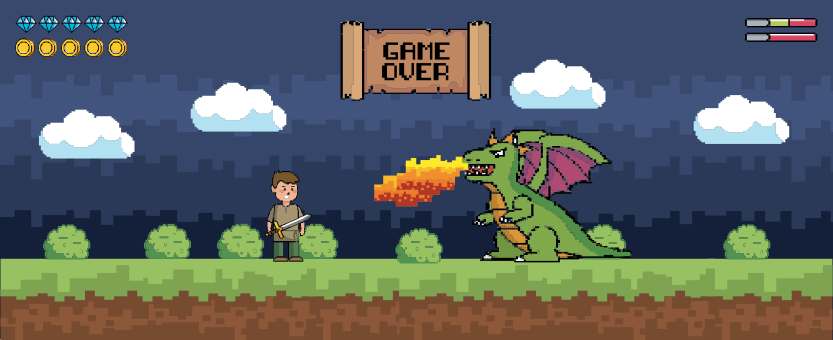
Gamification has already become prevalent in today’s software industry due to its positive effect on both staff engagement and motivation. Many companies worldwide are introducing game elements into their workflow, products, and loyalty programs. The objective of any gamification program is to encourage the workers to obtain high results. Despite the numerous benefits of gamification, companies may experience some unpleasant outcomes because of mistakes made while implementing game mechanisms.
Let’s get a deeper insight into the typical pitfalls you should avoid for the sake of a seamless deployment of gamification.
Ranking Rewards First Instead of Prioritizing Results
You should not view rewards as the cornerstone of the gamification initiative. They are designed as motivators that push employees to gain the expected results. If you place rewards over achievements, the workers will do their best to win the gamified competition. Consequently, the business goal of achieving great results will be overshadowed by a mere desire to get a prize. To avoid this mistake, you should formulate clear goals and outline reasonable expectations you would like to obtain through gamification.
Complex & Multifaceted Game Mechanism
Designing a sophisticated solution that includes several levels and different badges may be the wrong way to start. Since the key goal of gamification involves gaining the lasting results through the outlined procedure, game tactics should be fully comprehensible. Make sure the users have a clear vision of the rules and criteria for allocating prizes. In fact, the clarity and user-friendliness of gamification provide higher productivity and efficiency for your company.
Promoting Tough Competition
The gamification plan can fail if it implies excessive or insufficient competition. Too many challenges discourage the employees, and, more importantly, divert their focus from key business goals. As a result, workers can disengage from gaming activities and even underperform. On the contrary, reasonable and healthy competition will drive users to meet deadlines and increase their KPIs. A great way to fix the problem is to grant a fair allocation of rewards, both for the team and for individuals.
Offering Inappropriate Rewards
If you assign your employees a task that is time and effort-consuming, but the reward is unsuitable, be ready to face dissatisfaction and massive exodus. If you offer a high reward for an assignment that is too easy, the whole concept of a contest may be lost. Before developing a reward system, you can conduct an internal survey to find out what kind of prizes your staff would like to have. Aside from a traditional pay rise, your employees may suggest something extraordinary. This step will assist you in developing an effective incentive program that will truly motivate and inspire your employees.
Using Momentary Solutions for Long-Term Issues
Another pitfall is attempting to effect long-run change through the use of short-run gamification tactics. A potential client may approach you with a request to tackle the issue through gamification. However, he does not realize that this strategy may be unsuitable and ineffective for solving the key problem. Therefore, the gamification approach should be well-designed and perceived as a complex scheme rather than a separate project. Utilizing variable-interval prizes and introducing new elements will foster long-run gamification.
Lacking a Defined Strategy
Even if you are a strong believer in the advantages of gamification, it is crucial to make sure it is in line with the preexisting strategy and objectives of your company. Failing to do so may provoke a gamified competition that does not align with your main goals and strategy. This can result in rising confusion and decreasing motivation among workers. Another unpleasant effect lies in the totally opposite result of what was originally expected. That is why you should tailor a comprehensive roadmap to succeed in implementing gamification steps and activities.
Ignoring Experience From Other Companies
If you are not sure how to start introducing gamification into your company, undertake in-depth research on your competitors’ gamification strategies. You can search for a company of the same size operating in your industry and find out some valuable information about the rewards program. It is always better to learn from others' failures and not fall victim to similar mistakes.
No Regular Analysis & Reporting
It is necessary to carry out certain measurements and analyses if you want to know whether the gamification strategy is serving its purpose. By obtaining regular reports, you can estimate the progress and introduce changes whenever necessary. It is a great way to foresee and avoid some mistakes while implementing gamification activities in your company.
Final Considerations
The one who does nothing makes no mistakes. This means that the risks are inherent in any endeavor involving new things and significant changes. The same is true for implementing gamification in your organization. Being aware of the typical gamification errors described above and the effective ways to fix them, you can develop a powerful gamification strategy that will help you achieve the original goals and stand out among your competitors.