

- Project Management
- Time Management
- Gamification
- Leave & Attendance Management
- Cryptocurrencies
- Web Development & SEO
Employee Monitoring Laws & Ethics
Dernière mise à jour :
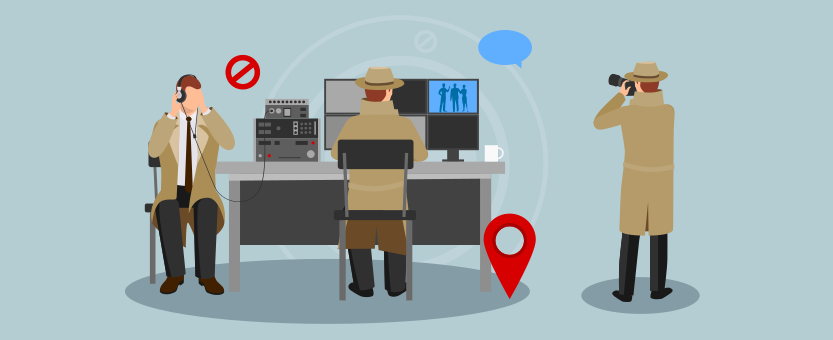
There are plenty of research studies conducted to understand how many employers monitor their employees. The studies show different numbers, that vary depending on the industry, type of work, and other factors. However, it would be safe to say that most companies have employee monitoring, and the number of such companies is growing.
According to the Zippia’s research study 60% of companies use employee monitoring tools. According to the Business Insider’s research, 96% of remote companies use various software to monitor employees who work from home.
Is it legal to monitor employees?
In most countries, it is legal to monitor employees, provided there are valid business reasons for that. That includes video surveillance on the business premises and using special software installed on work devices owned by the employer, even if they are taken home. Furthermore, employers are often not legally bound to disclose to their staff that they are being monitored.
For example, in the USA, employers’ right to monitor their employees is protected by the Electronic Communications Privacy Act of 1986 (ECPA).
According to ECPA employers can monitor:
- Keystrokes and screen content of company-owned devices, including outside of work hours or business premises.
- Personal devices used for work-related reasons.
- Social media and internet activities during work hours.
- Emails that go through the employer's network system or devices (even private emails).
- Phone conversations as long as there is consent from at least one party.
- Workplace activity using video monitoring systems (including using web cameras on the company’s devices).
- Employee locations using GPS during work hours (employers car locations can be monitored during off-duty hours as well).
Employers may retain the collected data but are not allowed to use it for personal purposes or disclose it to third parties.
Note that according to ECPA, it is still against the law to intentionally intercept any wire, oral, or electronic communication.
Is it ethical to monitor employees?
The ethics of monitoring employees is a complex and debated subject that depends on various factors and perspectives. Some arguments in favor of employee monitoring consider it a legitimate tool for enhancing productivity, protecting company assets, or ensuring compliance with policies and regulations.
Critics of employee monitoring say that it can violate individual privacy rights, break trust between employers and employees, create a hostile work environment, and lead to micromanagement. This increases stress and decreases job satisfaction and motivation among employees.
Here are some considerations to help evaluate the ethics of employee monitoring.
Legitimate reasons
Monitoring should only be conducted for legitimate business reasons, such as ensuring productivity, preventing misuse of company resources, improving customer support, or maintaining security. Employers should carefully consider the potential benefits and drawbacks of employee monitoring before enforcing it. Most people don’t like being watched and feel uncomfortable about it, and it might be challenging to keep qualified professionals after implementing intrusive monitoring practices.
Balance
Balancing the need for monitoring with employees’ rights and autonomy is essential. Monitoring measures should be proportionate to the goals being aimed and should not excessively intrude upon employees’ privacy.
Consent and awareness
Employees should give their consent and be informed about the monitoring practices. This includes the purpose, extent, and scope of monitoring, as well as any potential impact on employees’ privacy.
Transparency and fairness
Employers should apply monitoring measures consistently and fairly across all employees. This helps prevent discriminatory practices and ensures that monitoring is not used selectively or unfairly.
Data protection
Protecting employees’ data is essential. Employers should implement policies and protocols that protect employees' personal information and maintain data confidentiality.
Protection of employee privacy in the workplace
Although employee monitoring is usually legal and limits employee privacy in the workplace, in most countries, there are laws that protect employee privacy as well.
For instance, The American Data Privacy and Protection Act, H. R. 8152 introduced in July 2022 limits the gathering of data by asserting that employers can only process or transfer employee data for legitimate administrative purposes.
Wrapping up
Ethics regarding employee monitoring can be subjective and depend on various factors, including the specific circumstances and the methods employed. Views on this topic vary, but in any case, before implementing monitoring measures, consider whether there are less intrusive alternatives to achieve the desired outcomes, such as fostering a culture of transparency, providing clear expectations and feedback, or implementing performance management systems.